
Blog
Which Fuse for a UK Plug? Easy, Safe Guide to 3A, 5A & 13A

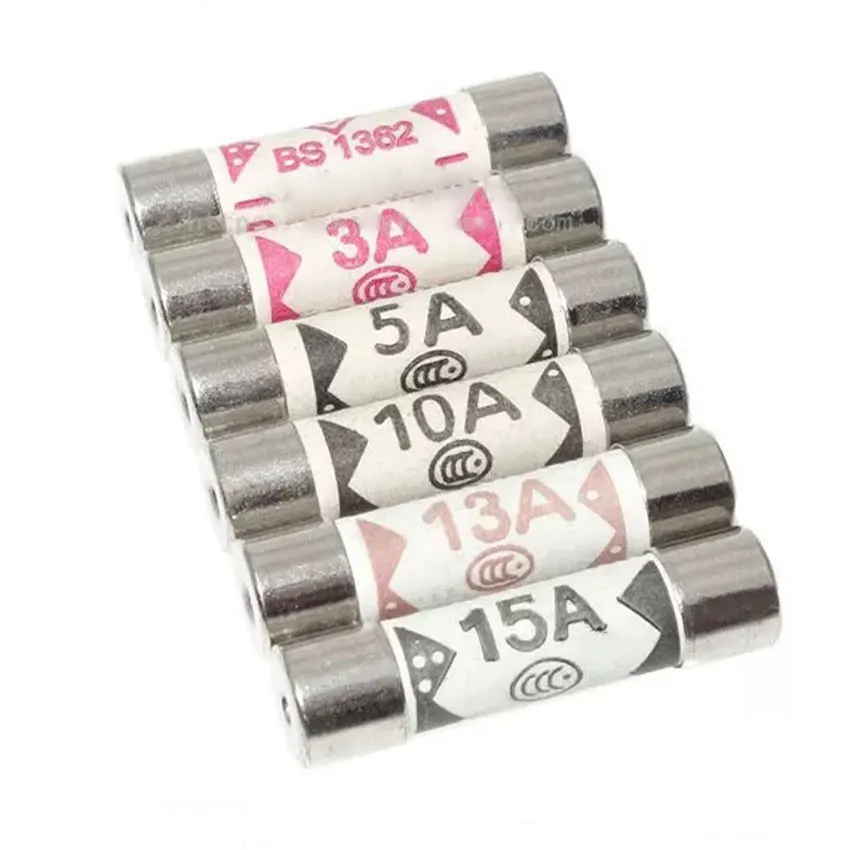
Wondering which fuse for a UK plug you actually need? A blown plug fuse is one of the most common little jobs in a British home. The kettle goes dead, the lamp won’t switch on, or the TV simply stops. Nine times out of ten the fix costs pennies, but only if you put the right fuse back in. This guide explains which fuse goes in a UK plug, how to work it out from the wattage on the label, and how to swap one safely.
Table of Contents
Quick answer: which fuse for a UK plug?
- 3A fuse (red): appliances up to about 700 watts, such as lamps, clocks, radios, phone and laptop chargers, routers and most small electronics.
- 13A fuse (brown): appliances over about 700 watts, such as kettles, toasters, irons, microwaves, washing machines, fridges and heaters.
- 5A fuse (black): found in some older equipment and some IT and audio gear. Only use one where the manufacturer or the old fuse says 5A.
The golden rule: always replace a fuse with one of the same rating, and follow the appliance’s instructions or rating plate if they say something different.
What does the fuse in a plug actually do?
UK 3-pin plugs (built to BS 1363) carry a small ceramic cartridge fuse made to the BS 1362 standard. Its main job is to protect the flex between the plug and the appliance. If a fault makes too much current flow, the thin wire inside the fuse melts and cuts the power before the cable can overheat and start a fire.
That’s why a fuse that is too big is dangerous. A 13A fuse in the plug of a thin lamp flex may not blow quickly enough if something goes wrong. A fuse that is too small just keeps blowing, which is annoying but not dangerous.
How to work out which fuse for a UK plug from the wattage
Look for the rating plate or sticker on the appliance, usually on the back, the base or the power brick. You will see a figure in watts (W) or kilowatts (kW).
- Find the wattage. For example, a table lamp might say 60W and a kettle 3kW (3,000W).
- Compare it with 700W. Under about 700W, a 3A fuse is normally right. Over about 700W, use a 13A fuse.
- Check the manual. Some devices with motors or power supplies draw a surge when they switch on and the maker may recommend 5A or 13A even though the wattage is low. The manufacturer’s instruction always wins.
If you like the maths: current (amps) = power (watts) ÷ voltage. UK mains is about 230V, so a 2,000W heater draws roughly 8.7A, which means it needs a 13A fuse, not a 3A one.
Which fuse for a UK plug: chart of common appliances
| Appliance | Typical fuse |
|---|---|
| Table or floor lamp | 3A |
| Phone, tablet or laptop charger | 3A |
| Wi-Fi router, TV box, games console | 3A (check the label) |
| Radio, alarm clock, small speaker | 3A |
| Television | 3A or 5A (check the label) |
| Desktop computer | 3A or 5A (check the label) |
| Vacuum cleaner, hairdryer | 13A on most modern models |
| Kettle, toaster, iron | 13A |
| Microwave, fridge, freezer | 13A |
| Washing machine, dishwasher, tumble dryer | 13A |
| Electric heater | 13A |
This chart is a general guide only. Your appliance’s rating plate or manual is the final word. For more home safety advice, see the Electrical Safety First guide to plugs and fuses.
Fuse colours: red, brown and black
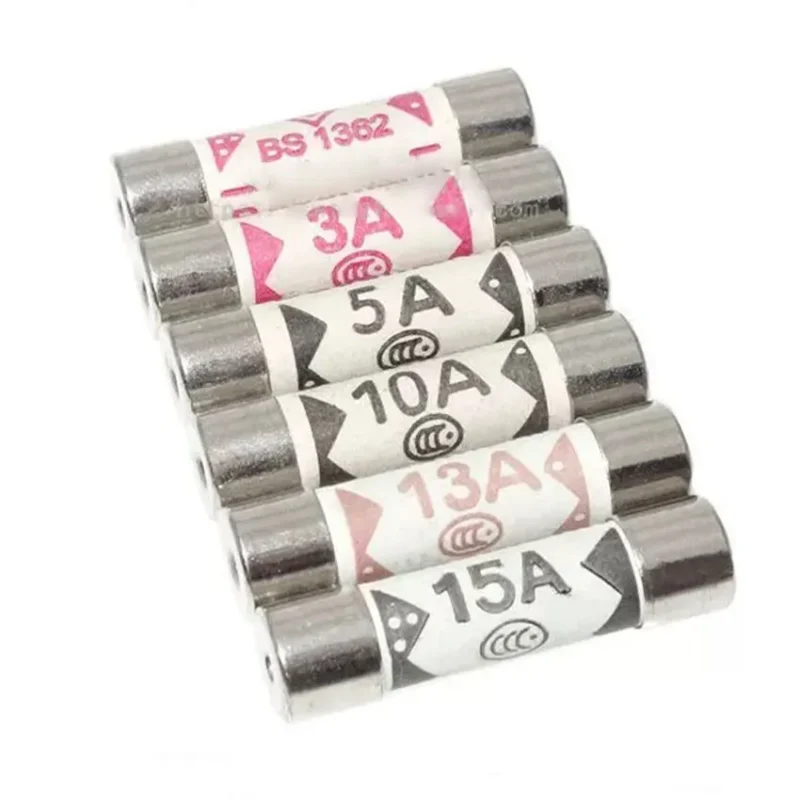
BS 1362 fuses are colour coded so you can tell them apart at a glance. 3A fuses are red and 13A fuses are brown. Every other rating, including 5A, is normally black. The rating is also printed on the side of the fuse, so double-check it before you fit it.
How to change a plug fuse safely
- Switch off and unplug the appliance from the wall. Never touch the inside of a plug while it’s in a socket.
- Find the fuse holder. On most modern moulded plugs there’s a small tray between the pins that you can lever out with a flat screwdriver. On rewireable plugs, undo the main screw and take the cover off.
- Remove the old fuse and read the rating printed on it.
- Fit a new fuse of the same rating, making sure it clicks firmly into place.
- Refit the tray or cover, plug back in and test.
Why does my plug fuse keep blowing?
A fuse blows for a reason. If a new fuse of the correct rating blows again straight away, stop using the appliance. Common causes include a damaged or crushed flex, a loose wire inside the plug, water getting into the appliance, or a fault inside the appliance itself. Never “fix” it by fitting a bigger fuse, wrapping the fuse in foil or bridging it with wire. That removes the protection and creates a real fire risk. If you’re not sure, ask a qualified electrician to look at it.
Tips for buying replacement fuses
- Look for the BS 1362 marking on the fuse body. That’s the British Standard for plug fuses.
- Keep a mixed pack of 3A, 5A and 13A in a kitchen drawer, so you’re never stuck when something stops working on a Sunday evening.
- Don’t confuse plug fuses with car fuses or the small glass fuses used inside electronics. They are different sizes and are not interchangeable.
Need spares? Our 10-pack of British plug fuses comes in 3A, 5A, 10A and 13A ratings. For the car, the car blade fuse assortment set covers the most common sizes in one handy box.
Which fuse for a UK plug: frequently asked questions
Can I use a 13A fuse instead of a 3A fuse?
It’s not recommended. The appliance will still work, but a 13A fuse may not blow quickly enough to protect a thin flex if a fault develops. Always use the rating the manufacturer specifies.
Can I use a 3A fuse instead of a 13A fuse?
Only for low-power devices. In a kettle, heater or other high-power appliance, a 3A fuse will simply blow as soon as you switch it on.
Are 5A fuses still used?
Yes, but less often. Manufacturers have largely standardised on 3A and 13A, though 5A fuses still turn up in some older equipment and some TVs, computers and audio gear. If your old fuse was 5A, replace it with 5A.
Does a fuse protect the appliance or the cable?
Mainly the cable. Most appliances have their own internal protection, while the plug fuse is there to stop the flex overheating if something goes wrong.
Still unsure which fuse for a UK plug is right for your appliance? Check the rating plate, match the old fuse, and when in doubt, choose the rating the manufacturer recommends.
This guide is for general information. Electricity can be dangerous. If you’re in any doubt, always consult a qualified electrician.